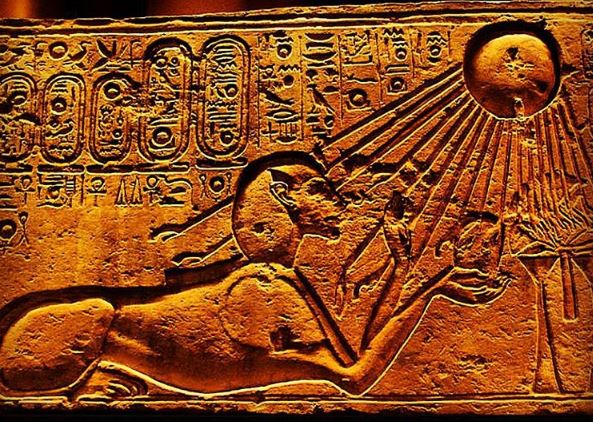
The
ancient astronaut (or
alien)
hypothesis (AAH) or
contact (AAC) is a
pseudoscientific hypothesis that posits that intelligent
extraterrestrial beings have visited
Earth and made contact with humans in
antiquity and
prehistory.
[1] Proponents suggest that this contact influenced the development of human
cultures,
technologies, and
religions. A common claim is that
deities from most, if not all, religions are actually extraterrestrial in nature, and that such visitors' advanced technologies were interpreted by early humans as evidence of divine status.
[2][3]
The idea that ancient astronauts actually existed is not taken seriously by academics, and has received little or no credible attention in
peer reviewed studies.
[5] Ancient astronauts have been widely used as a
plot device in
science fiction.
Overview[edit]

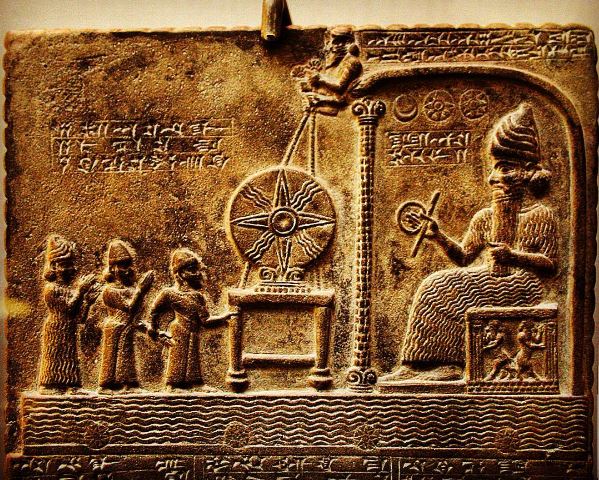
Ancient astronauts proponents suggest that aliens came to Earth long ago, citing such evidence as this ancient
Mesopotamiancylinder seal as proof of advanced technological influences
Proponents of the ancient astronaut hypotheses often maintain that
humans are either descendants or creations of
extraterrestrialbeings who landed on Earth thousands of years ago. An associated idea is that humans evolved independently, but that much of human knowledge, religion, and culture came from extraterrestrial visitors in ancient times, in that ancient astronauts acted as a "
mother culture". Some ancient astronaut proponents also believe that travelers from outer space, referred to as "astronauts" (or "spacemen") built many of the structures on Earth (such as
Egyptian pyramids and the
Moai stone heads of
Easter Island) or aided humans in building them.
[6][7]
Ancient astronauts hypothesis of creation[edit]
Proponents argue that the evidence for ancient astronauts comes from documentary gaps in historical and archaeological records, and they also maintain that absent or incomplete explanations of historical or archaeological data point to the existence of ancient astronauts. The evidence is argued to include archaeological
artifacts that they deem
anachronistic, or beyond the accepted technical capabilities of the historical cultures with which they are associated. These are sometimes referred to as "
out-of-place artifacts"; and include
artwork and
legends which are interpreted in a modern sense as depicting extraterrestrial contact or technologies.
[citation needed]
Legitimate academics have responded that gaps in contemporary knowledge of the past need not demonstrate that such speculative ancient astronaut ideas are a necessary conclusion to draw.
[8]
Hypothesis origins and proponents[edit]

A physiologically manipulated
Nazcaskull (housed at the
Museo Regional de Icain
Peru). AAC theorists claim the practice came about to emulate the bone structure of ancient alien visitors to earth.
Shklovski and Sagan[edit]

A
Dogū figurine from
Japan(dated 1000–400 BCE). Ancient astronaut proponents suggest that these may represent extraterrestrial visitors.
In their 1966 book
Intelligent Life in the Universe,
[9] astrophysicists
I.S. Shklovski and
Carl Sagandevote a chapter
[10] to arguments that scientists and historians should seriously consider the possibility that extraterrestrial contact occurred during recorded history. However, Shklovski and Sagan stressed that these ideas were speculative and unproven.
Shklovski and Sagan argued that sub-lightspeed interstellar travel by extraterrestrial life was a certainty when considering technologies that were established or feasible in the late '60s;
[11] that repeated instances of extraterrestrial visitation to Earth were plausible;
[12] and that pre-scientific narratives can offer a potentially reliable means of describing contact with alien.
Sagan illustrates this hypothesis by citing the 1786 expedition of French explorer
Jean-François de Galaup, comte de La Pérouse, which made the earliest
first contact between European and
Tlingit cultures. The contact story was preserved as an
oral tradition by the preliterate Tlingit. Over a century after its occurrence it was then recorded by anthropologist
George T. Emmons. Although it is framed in a Tlingit cultural and spiritual paradigm, the story remained an accurate telling of the 1786 encounter. According to Sagan, this proved how "under certain circumstances, a brief contact with an alien civilization will be recorded in a re-constructible manner. He further states that the reconstruction will be greatly aided if 1) the account is committed to written record soon after the event; 2) a major change is effected in the contacted society; and 3) no attempt is made by the contacting civilization to disguise its exogenous nature."
[13]

Votive relief of the winged priest of Dudu (on display at the Louvre Museum, France)
Additionally, Shklovski and Sagan cited tales of
Oannes, a fishlike being attributed with teaching agriculture, mathematics, and the arts to early Sumerians, as deserving closer scrutiny as a possible instance of paleocontact due to its consistency and detail.
[14]
In his 1979 book
Broca's Brain, Sagan
[15] suggested that he and Shklovski might have inspired the wave of '70s ancient astronaut books, expressing disapproval of "von Däniken and other uncritical writers" who seemingly built on these ideas not as guarded speculations but as "valid evidence of extraterrestrial contact." Sagan argued that while many legends, artifacts, and purported
out-of-place artifacts were cited in support of ancient astronaut hypotheses, "very few require more than passing mention" and could be easily explained with more conventional hypotheses. Sagan also reiterated his earlier conclusion that extraterrestrial visits to Earth were possible but unproven, and improbable.
Erich von Däniken[edit]
Erich von Däniken was a leading proponent of this hypothesis in the late 1960s and early 1970s, gaining a large audience through the 1968 publication of his best-selling book
Chariots of the Gods? and its sequels.
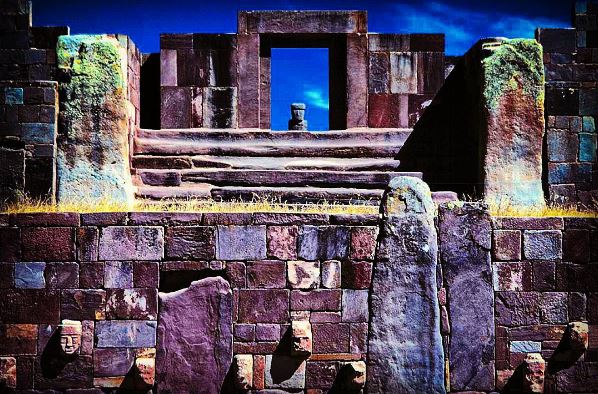
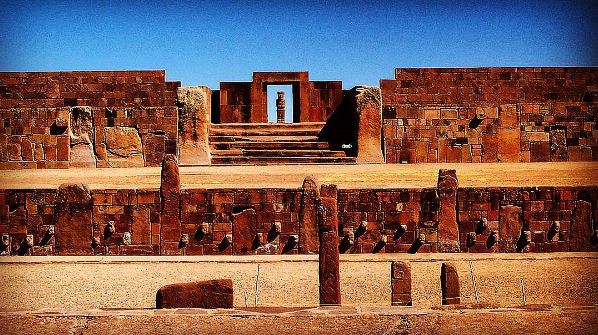
Certain artifacts and monumental constructions are claimed by von Däniken to have required a more sophisticated technological ability in their construction than that which was available to the ancient cultures who constructed them. Von Däniken maintains that these artifacts were constructed either directly by extraterrestrial visitors or by humans who learned the necessary knowledge from said visitors. These include
Stonehenge,
Pumapunku, the
Moai of
Easter Island, the
Great Pyramid of Giza, and the
ancient Baghdad electric batteries.
Von Däniken claims that ancient art and
iconography throughout the world illustrates air and space vehicles, non-human but intelligent creatures, ancient astronauts, and artifacts of an anachronistically advanced technology. Von Däniken also claims that geographically separated historical cultures share artistic themes, which he argues imply a common origin. One such example is von Däniken's interpretation of the sarcophagus lid recovered from the tomb of the Classic-era
Maya ruler of
Palenque,
Pacal the Great. Von Däniken claimed the design represented a seated astronaut, whereas the iconography and accompanying
Maya textidentifies it as a portrait of the ruler himself with the
World Tree of Maya mythology.
The origins of many religions are interpreted by von Däniken as reactions to encounters with an alien race. According to his view, humans considered the technology of the aliens to be
supernatural and the aliens themselves to be
gods. Von Däniken claims that the oral and written traditions of most religions contain references to alien visitors in the way of descriptions of stars and vehicular objects travelling through air and space. One such is
Ezekiel's revelation in the
Old Testament, which Däniken interprets as a detailed description of a landing spacecraft (
The Spaceships of Ezekiel).
Critics argue that von Däniken misrepresented data, that many of his claims were unfounded, and that none of his core claims have been validated.
[16]
Zecharia Sitchin[edit]

Stone glyphs depicting a story about the
Anunnaki (inhabitants of the planet
Nibiru) mentioned in ancient
Sumerian texts
Zecharia Sitchin's series
The Earth Chronicles, beginning with
The 12th Planet, revolves around Sitchin's unique interpretation of ancient
Sumerian and
Middle Eastern texts, megalithic sites, and artifacts from around the world.
[17][18] He hypothesizes that the gods of old
Mesopotamia were actually astronauts from the planet "
Nibiru", which Sitchin claims the Sumerians believed to be a remote "12th planet" (counting the Sun, Moon, and Pluto as planets) associated with the god
Marduk. According to Sitchin, Nibiru continues to orbit our sun on a 3,600-year elongated orbit. Modern
astronomy has found no evidence to support Sitchin's claims.
[17]
Sitchin claimed there are Sumerian texts which tell the story that 50
Anunnaki, inhabitants of a planet named Nibiru, came to Earth approximately 400,000 years ago with the intent of mining raw materials, especially gold, for transport back to Nibiru. With their small numbers they soon grew tired of the task and set out to genetically engineer laborers to work the mines. After much trial and error they eventually created
Homo sapiens sapiens: the "
Adapa" (model man) or
Adam of later mythology. Sitchin contended the Anunnaki were active in human affairs until their culture was destroyed by global catastrophes caused by the abrupt end of the last
ice age some 12,000 years ago. Seeing that humans survived and all they had built was destroyed, the Anunnaki left Earth after giving humans the opportunity and means to govern themselves. Sitchin's work has not received mainstream scholarly support and has been roundly criticized by professionals that have reviewed his hypotheses.
Semitic languages scholar
Michael S. Heiser says that many of Sitchin's translations of Sumerian and Mesopotamian words are not consistent with Mesopotamian cuneiform bilingual dictionaries, produced by ancient Akkadian scribes.
[19][20][21]
Robert Temple[edit]
Robert K. G. Temple's 1976 book,
The Sirius Mystery argues that the
Dogon people of northwestern
Mali preserved an account of extraterrestrial visitation from around 5,000 years ago. He quotes various lines of evidence, including supposed advanced astronomical knowledge inherited by the tribe, descriptions, and comparative belief systems with ancient civilizations such as
ancient Egypt and
Sumer. His work draws heavily on the studies of cultural anthropologists
Marcel Griaule and
Germaine Dieterlen.
[22]
His conclusions have been criticized by scientists, who point out discrepancies within Temple's account, and suggested that the Dogon may have received some of their astronomical information recently, probably from European sources, and may have misrepresented Dogon ethnography.
[23][24][25]
UFO religions[edit]
Main article:
UFO religion
Various
new religious movements including some branches of
theosophy,
Scientology,
Raëlism, and
Heaven's Gate believe in ancient and present-day contact with extraterrestrial intelligence. Many of these faiths see both ancient scriptures and recent revelations as connected with the action of aliens from other planetary systems. Sociologists and psychologists have found that UFO religions have similarities which suggest that members of these groups consciously or
subliminally associate enchantment with the
memes of
science fiction.
[26]
Evidence cited by proponents[edit]
Rama being welcomed upon his return to
Ayodhya in his "flying car." Some ancient astronauts proponents claim this narrative is further evidence for flying vehicles, or
Vimanas, in antiquity.
Ancient religious texts[edit]
Proponents cite ancient mythologies to support their viewpoints based on the idea that ancient creation myths of gods who descend from the heavens to Earth to create or instruct humanity are actually representations of alien visitors, whose superior technology accounts for their perception as gods. Proponents draw an analogy to occurrences in modern times when isolated cultures are exposed to Western technology, such as when, in the early 20th century, "
cargo cults" were discovered in the South Pacific: cultures who believed various Western ships and their cargo to be sent from the gods as fulfillment of prophecies concerning their return.
[27]
The ancient Sumerian myth of
Enûma Eliš, inscribed on cuneiform tablets and part of the
Library of Ashurbanipal, says humankind was created to serve gods called the "
Annunaki". Hypothesis proponents believe that the Annunaki were aliens who came to earth to mine gold for their own uses. According to the Enuma Elish story, the Annunaki realized mining gold was taking a toll on their race, and then created the human race as slaves.
[28]
Ramayana[edit]
In
Hindu mythology,
the gods and their
avatars travel from place to place in flying vehicles (see
Vimana). There are many mentions of these flying machines in the
Ramayana, which dates to the 5th or 4th century BCE. Below are some examples:
From Book 6, Canto CXXIII: The Magic Car:
[29]
Is not the wondrous chariot mine,
Named Pushpak, wrought by hands divine.
…
This chariot, kept with utmost care,
Will waft thee through the fields of air,
And thou shalt light unwearied down
In fair Ayodhyá's royal town.
From Book 6, Canto CXXIV: The Departure:
[29]
Swift through the air, as
Ráma chose,
The wondrous car from earth arose.
And decked with swans and silver wings
Bore through the clouds its freight of kings.
Erich von Däniken discusses the
Ramayana and the
vimanas in Chapter 6 of
Chariots of the Gods? suggesting that they were "space vehicles". To support his hypothesis, he offers a quotation which he says is from an 1889 translation of the
Mahabharata by C. Roy: "
Bhima flew with his Vimana on an enormous ray which was as brilliant as the sun and made a noise like the thunder of a storm".
[30]
See also, the
Vaimanika Shastra, a text on Vimanas, which supposedly "channeled" in the early 20th century.
[31]
Book of Genesis and Book of Enoch[edit]
When human beings began to increase in number on the earth and daughters were born to them, the
sons of God saw that the daughters of humans were beautiful, and they married any of them they chose.
...
The
Nephilim were on the earth in those days—and also afterward—when the sons of God went to the daughters of humans and had children by them.
— Genesis 6:1–4 (New International Version)
Many Christians consider these groups to be the different families of Adam and Eve's children. A more fantastic interpretation is that the Nephilim are the children of the "sons of God" and "daughters of humans", although scholars are uncertain.
[32] The
King James Version translates "Nephilim" as "giants" (or
Gibborim). Ancient Astronaut theorists argue that Adam and Eve ate of the
forbidden fruit in order "to be godlike", and this was the first step in
human evolution. Hypothesis proponents argue further that the biblical
tree of knowledge is a metaphor for the human DNA sequence.
[citation needed]
The first part of the apocryphal
Book of Enoch expands and interprets Genesis 6:1: that the "sons of God" were a group of 200 "
angels" called "
Watchers", who descended to Earth to breed with humans. Their offspring are the Nephilim, "giants" who "consumed all the acquisitions of men". When humans could no longer sustain the Nephilim, they turned against humanity. The Watchers also instructed humans in
metallurgy and
metalworking,
cosmetics,
sorcery,
astrology,
astronomy, and
meteorology. God then ordered the Watchers to be imprisoned in the ground, and created the Great Flood (or the numerous
Deluge myths) to rid Earth of the Nephilim and of the humans given knowledge by the Watchers. To ensure humanity's survival,
Noah is forewarned of the oncoming destruction. Because they disobeyed God, the book describes the Watchers as "
fallen angels".
[33]
Some ancient astronaut proponents argue that this story is a historical account of extraterrestrials visiting Earth, called Watchers because their mission was to observe humanity. Some of the extraterrestrials disobeyed orders; they made contact with humans, cross-bred with human females, and shared knowledge with them. The Nephilim were thus half-human-half-extraterrestrial
hybrids.
[34]
Chuck Missler and Mark Eastman argue that modern UFOs carry the fallen angels, or offspring of fallen angels, and that "Noah's genealogy was not tarnished by the intrusion of fallen angels. It seems that this adulteration of the human gene pool was a major problem on the planet earth".
[35]
Von Däniken also suggests that the two angels who visited
Lot in Genesis 19 were ancient astronauts, who used atomic weapons to destroy the city of
Sodom.
[36]
Marc Dem reinterprets the Book of Genesis by claiming humanity started on another planet and that the God of the Bible is an extraterrestrial.
[37]
Book of Ezekiel[edit]
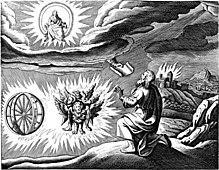
An engraved illustration of Ezekiel's 'vision' (1670)
In the
Old Testament, Chapter 1 of the
Book of Ezekiel recounts a vision in which Ezekiel sees "an immense cloud" that contains fire and emits lightning and "brilliant light". It continues: "The center of the fire looked like glowing metal, and in the fire was what looked like four living creatures". These creatures are described as winged and humanoid, they "sped back and forth like flashes of lightning" and "fire moved back and forth among the creatures". The passage goes on to describe four shiny objects, each appearing "like a wheel intersecting a wheel". These objects could fly and they moved with the creatures: "When the living creatures moved, the wheels beside them moved; and when the living creatures rose from the ground, the wheels also rose".
[38]
In Chapter 4 of
Chariots of the Gods?, entitled "Was God an Astronaut?", von Däniken suggests that Ezekiel had seen a spaceship or spaceships; this hypothesis had been put forward by
Morris Jessup in 1956
[39] and by Arthur W. Orton in 1961.
[40] A detailed version of this hypothesis was described by Josef F. Blumrich in his book
The Spaceships of Ezekiel (1974).
[41]
Elsewhere in the Bible[edit]
Some ancient astronaut proponents such as
Von Däniken and
Barry Downing believe that the concept of
hell in the
Bible could be a real description of the planet
Venus brought to Earth by
extraterrestrials showing photos of the hot surface on Venus to
humans.
[46] Proponents of the hypothesis state that '
God' and '
Satan' were actually aliens that disagreed on whether or not human beings should be allowed the information that is offered by the tree of knowledge.
David Childress, a leading proponent of ancient astronaut creation hypothesis, compares this story to the Greek tale of
Prometheus, who gave mankind the knowledge of fire. Ancient Astronaut theorists believe the biblical concept of Satan is based on a misunderstood visit by extraterrestrials.
Erich von Däniken posited that the descendants of extraterrestrials had children with
hominids, and this was referred to in the Bible as the "
Original Sin." Von Däniken believes that the biblical
great flood was punishment after an extraterrestrial 'God' discovered that earthbound,
fallen angels, were mating with ape-like early humans.
[47]
Ancient artwork[edit]

Comparison of some
Ural pictograms to modern structural formulae of several chemical compounds (according to Russian researcher Vladimir Avinsky)
Worldwide petroglyphic evidence[edit]
Ancient astronaut theorists believe
Hopi cave drawings found in the southwestern desert, link the origins of
Hopi and Zuni tribes with "star people" (see "
Kachinas"). They point to similar etchings elsewhere as evidence that extraterrestrials visited many different ancient civilizations. They state that the Hopi and Zuni drawings depict contact with "beings from space who are not gods, but [have] brought knowledge from another planet".
[citation needed]
Other artistic support for the ancient astronaut hypothesis has been sought in
Palaeolithic cave paintings.
Wondjina in Australia and in the
Rock Drawings in Valcamonica, in Italy (seen above) are claimed to bear a resemblance to present day astronauts.
[48] Supporters of the ancient astronaut hypothesis sometimes claim that similarities such as dome shaped heads, interpreted as beings wearing space helmets, prove that early man was visited by an extraterrestrial race.
[49]
More support of this hypothesis draws upon what are claimed to be representations of
flying saucers in
medieval and
renaissance art.
[50] This is used to support the ancient astronaut hypothesis by attempting to show that the creators of humanity return to Earth periodically.
[citation needed]
Nazca Lines[edit]
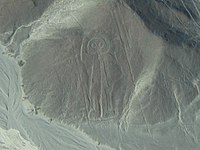
"The Astronaut" - a large
geoglyph near the Nazca Lines
The ancient
Nazca Lines are hundreds of huge ground drawings etched into the high desert of southern
Peru. Some are stylized animals and humanoid figures, while others are merely straight lines hundreds of meters long. As the figures were made to be seen from a great height, they have been linked with the ancient astronaut hypothesis. Von Däniken (1970) says that the Nazca lines and figures could have been made "according to instructions from aircraft" and suggests that the longer and wider lines might be
runways for spacecraft.
[51] Archaeologist
Kenneth Feder has written that Von Däniken's extraterrestrial interpretation is not supported by any evidence. Feder wrote that "the lines are interpreted by archaeologists as ceremonial pathways of the ancient Nazca people; they were used precisely in this way in the fairly recent past."
[52]
Ancient artifacts[edit]
Alleged physical evidence includes the discovery of artifacts in
Egypt (the
Saqqara Bird) and
Colombia-
Ecuador, which are claimed to be similar to modern planes and gliders,
[53]although these have been interpreted by archaeologists as stylized representations of birds and insects.
[citation needed]
Megalithic sites[edit]

Ahu Tongariki near
Rano Raraku; ancient astronaut proponents claim the stone structures were built by (or with the help of) extraterrestrials
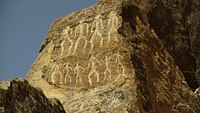
These 10,000-year-old carvings in
Azerbaijan resemble human beings, but are according to supporters of the hypothesis also similar to beings reported by abductees.
Evidence for ancient astronauts is claimed to include the existence of ancient monuments and
megalithic ruins such as the
Giza pyramids of Egypt,
Machu Picchu in Peru, or
Baalbek in
Lebanon, the Moai of
Easter Island and
Stonehenge of England.
[54] Supporters contend these stone structures could not have been built with the technical abilities and tools of the people of the time and further argue that many could not be duplicated even today. They suggest that the large size of the building stones, the precision with which they were laid, and the distances many were transported leaves the question open as to who constructed these sites.
[citation needed]
These contentions are categorically rejected by mainstream archeology. Some mainstream archeologists have participated in
experiments to move large megaliths. These experiments have succeeded in moving megaliths up to at least 40 tons,
[55][56] and they have speculated that with a larger workforce larger megaliths could be towed with the use of known ancient technology.
[57] Such allegations are not unique in history, however, as similar reasoning lay behind the wonder of the
Cyclopean masonry walling at
Mycenaean cities in the eyes of Greeks of the following "
Greek Dark Ages", who believed that the giant
Cyclops had built the walls.
[citation needed]
Religious and cultural practices[edit]
A number of ancient cultures, such as the Ancient Egyptians and some Native Americans,
artificially lengthened the skulls of their children. Some ancient astronaut proponents propose that this was done to emulate extraterrestrial visitors, whom they saw as gods.
[58][59] Among the ancient rulers depicted with elongated skulls are
pharaoh Akhenaten and
Nefertiti. It has been pointed out that the
Grey aliens (historically referred to as "
little green men"), described by many
alien abductees have similarly shaped heads.
[58] In the program
Ancient Aliens it was suggested that the owners of the biggest of the lengthened skulls may be human-extraterrestrial hybrids.
[58]
Critics[edit]
Alan F. Alford, author of
Gods of the New Millennium (1996), was an adherent of the ancient astronaut hypothesis. Much of his work draws on Sitchin's hypotheses. However, he now finds fault with Sitchin's hypothesis after deeper analysis, stating that: "I am now firmly of the opinion that these gods personified the falling sky; in other words, the descent of the gods was a poetic rendition of the cataclysm myth which stood at the heart of ancient Near Eastern religions."
[60]
Robert Todd Carroll in the
The Skeptic's Dictionary (2003) has written that ancient astronaut ideas are not based on scientific investigation but pseudoscientific speculation. He concluded that the "ancient astronaut hypothesis is unnecessary.
Occam's razor should be applied and the hypothesis is rejected."
[62]
Terence Hines author of
Pseudoscience and the Paranormal (2003) has described the ancient astronaut hypothesis as a pseudoscience and has said that its proponents look for mysteries where none exist. According to Hines ancient astronaut proponents such as Von Däniken have fabricated evidence and distorted the facts of archeological research.
[63]
Popular culture[edit]
The ancient astronaut hypothesis has been used as a background or as the main topic in many fictional works such as Lovecraft's short story "
The Call of Cthulhu" (1926) and novella
At the Mountains of Madness (1931) as well as in many of his other works. In addition to the previously mentioned tiles, The Ancient Astronaut theory influenced the television shows
Quatermass and the Pit,
The X-Files,
Earth: Final Conflict, and a few
Star Trek projects including, most notably, "
Who Mourns for Adonais?". The films
2001: A Space Odyssey (1968),
Stargate (1994),
Alien vs. Predator (2004), virtually all of the
Transformers movies,
Knowing (2009),
Thor (2011) and
Prometheus (2012) were heavily influenced by this theory. Other works of fiction including many
comic books,
manga,
anime and
video games were also influenced by this theory.
[citation needed]
Proponents[edit]
Many publications have argued for the ancient astronauts hypotheses. Notable examples include these:
- 1919: Charles Fort (book, The Book of the Damned)
- 1954: Harold T. Wilkins (book, Flying Saucers from the Moon)
- 1956: Morris K. Jessup (book, UFOs and the Bible)
- 1957: Peter Kolosimo (book, Il pianeta sconosciuto (The Unknown Planet))
- 1958: George Hunt Williamson (book, Secret Places of the Lion)
- 1958: Henri Lhote[66] (book, The Search for the Tassili Frescoes: The story of the prehistoric rock-paintings of the Sahara)
- 1959: Jacques Bergier and Louis Pauwels (book, The Morning of the Magicians)
- 1960: Brinsley Le Poer Trench (book, The Sky People)
- 1961: Matest M. Agrest (article, The Astronauts of Yore)[67]
- 1963: Robert Charroux (book, One Hundred Thousand Years of Man's Unknown History)
- 1964: W. Raymond Drake (book, Gods or Spacemen?)
- 1965: Paul Misraki (book, Flying Saucers Through The Ages)
- 1967: Brad Steiger (book, The Flying Saucer Menace)
- 1967: John Michell (book, The Flying Saucer Vision)
- 1968: Erich von Däniken (book, Chariots of the Gods?)
- 1968: Barry Downing (book, The Bible and Flying Saucers)
- 1969: Robert Dione (book, God Drives a Flying Saucer)
- 1969: Jean Sendy (book, Those Gods Who Made Heaven and Earth; the novel of the Bible)
- 1972: Thomas Charles Lethbridge (book, The Legend of the Sons of God: A Fantasy?)
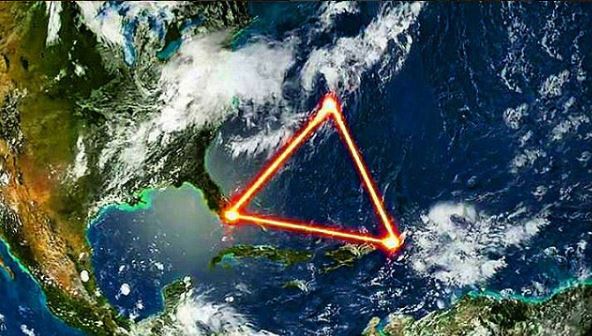
- 1974: Charles Berlitz (book, The Bermuda Triangle)
- 1974: Josef F. Blumrich (book, The Spaceships of Ezekiel)
- 1974: Claude Vorilhon aka Rael (book, Le Livre Qui Dit La Vérité (The Book Which Tells the Truth))
- 1974: Robin Collyns (book, Did Spacemen Colonise the Earth?)
- 1975: Graham Cairns-Smith (a biochemist who suggested that the ancestors of humans might have had alien biochemistries and presented evidence to support this possibility in a biological research journal)[68][69]
- 1975: Serge Hutin (book, Alien Races and Fantastic Civilizations)
- 1976: Robert K. G. Temple (book, The Sirius Mystery)
- 1976: John Baxter, Thomas Atkins (book, The Fire Came By: The Riddle of the Great Siberian Explosion)
- 1977: John Philip Cohane (book, Paradox: The Case for the Extraterrestrial Origin of Man)
- 1977: Warren Smith (book, UFO Trek)
- 1978: George Sassoon and Rodney Dale (book, Manna Machine)
- 1978: Zecharia Sitchin (book, The 12th planet)
- 1980: J. J. Benítez (book, Los astronautas de Yavé — Spanish: Yahweh's astronauts)
- 1984: Don Elkins, James McCarthy, Carla Rueckert (book, The Ra Material: An Ancient Astronaut Speaks (The Law of One, No 1))
- 1984: Salvador Freixedo, (book, ¡Defendámonos de los Dioses! — Spanish: Let Us Defend Ourselves from the Gods!)
- 1988: Salvador Freixedo, (book, La Granja Humana — Spanish: The Human Farm)
- 1988: Riley Martin (book, The Coming of Tan)
- 1989: Salvador Freixedo, (book, La Amenaza Extraterrestre — Spanish: The Alien Threat).
- 1993: David Icke (book, --and the truth shall set you free)
- 1996: Alan F. Alford (book, Gods of the New Millennium)
- 1996: Murry Hope (book, The Sirius Connection: Unlocking the Secrets of Ancient Egypt)
- 1996: Richard C. Hoagland (book, The Monuments of Mars: A City on the Edge of Forever)
- 1998: Lloyd Pye (book, Everything You Know is Wrong — Book One: Human Evolution)
- 1998: James Herbert Brennan (book, Martian Genesis)
- 1999: David Hatcher Childress (book, Technology of the Gods, The Incredible Science of the Ancients)
- 1999: Laurence Gardner (book, Genesis of the Grail Kings: The Explosive Story of Genetic Cloning)
- 2003: Burak Eldem (book, 2012: Appointment With Marduk)
See also[edit]
 | Wikimedia Commons has media related to UFO. |
| Wikimedia Commons has media related to Aliens. |
References[edit]
- Jump up^ Patrick Grim (1982), Philosophy of Science and Occult (1st ed.), SUNY Press, pp. 285–, ISBN 978-0-87395-573-7
- Jump up^ Lieb, Michael (1998). Children of Ezekiel: Aliens, Ufos, the Crisis of Race, and the Advent of End Time. Duke University Press. p. 250. ISBN 0-8223-2268-4.
- Jump up^ Cithara. St. Bonaventure University. 1961. p. 12.
- Jump up^ Von Däniken, Erich (1984). Chariots of the Gods. Berkley Pub Group. ISBN 0-425-07481-1.
- Jump up^ Harrold; "Noah's Ark and Ancient Astronauts: Pseudoscientific Beliefs About the Past Among a Sample of College Students;" The Skeptical Inquirer; vol 11.1; 1986: 61;Committee for the Scientific Investigation of Claims of the Paranormal; 13 Dec 2010.
- Jump up^ Olien, Michael D. (1978). "Did Ancient Astronauts Bring Civilization?". The human myth: An introduction to anthropology. USA: Harper & Row. pp. 236–241, 245, 255. ISBN 0-06-044918-7.
- Jump up^ Ancient Astronauts; article; Weekly World News Apr 3, 2001
- Jump up^ Sagan, Carl (1979). "II The Paradoxers - 5. Night Walkers and Mystery Mongers: Sense and Nonsense at the Edge of Science". Broca's Brain. USA: Random House. pp. 53–54.ISBN 0-394-50169-1.
- Jump up^ Shklovski, I.S and Carl Sagan. Intelligent Life in the Universe. San Francisco: Holden-Day, 1966
- Jump up^ "The Possible Consequences of Direct Contact," authored mostly by Sagan, according to line-by-line indications of individual or collaborative sections.
- Jump up^ "...civilizations, aeons more advanced than ours, must be plying the spaces between stars..."; Shklovski and Sagan; p. 464
- Jump up^ Note: Even allowing for millions of years between visits from a hypothetical "galactic survey ship", Sagan calculated ~10ˆ4 such visits could have occurred "during [Earth's] geologic time"; Shklovski and Sagan; p. 461;
- Jump up^ Shklovski and Sagan; p. 453
- Jump up^ "stories like the Oannes legend, and representations especially of the earliest civilizations on Earth, deserve much more critical studies than have been performed heretofore, with the possibility of direct contact with an extraterrestrial civilization as one of many possible alternative explanations". Shklovski and Sagan, p. 461
- Jump up^ Sagan, Broca's Brain, p. 67
- Jump up^ Erich von Däniken's "Chariots of the Gods"—Science or Charlatanism?; Robert Sheaffer; October/November, 1974; "NICAP UFO Investigator", retrieved .
- ^ Jump up to:a b Carroll, Robert T (1994–2009). "The Skeptic's Dictionary". Zecharia Sitchin and The Earth Chronicles. John Wiley & Sons. Retrieved 5 January 2013.
- Jump up^ Kilgannon, Corey (January 8, 2010). "Origin of the Species, From an Alien View". The New York Times. Retrieved 29 October 2010.
Mr. Sitchin was called silly before—by scientists, historians and archaeologists who dismiss his hypotheses as pseudoscience and fault their underpinnings—his translations of ancient texts and his understanding of physics.
- Jump up^ "Open Letter to Zecharia Sitchin". stichiniswrong.com.
- Jump up^ Zechariah Sitchin, Mark Pilkington, Fortean Times, August 2003.
- Jump up^ "The Anunnaki". stichiniswrong.com.
- Jump up^ Temple, Robert K. G., The Sirius Mystery, 1976. ISBN 0-09-925744-0
- Jump up^ Sagan, Carl, Broca's Brain, published by Random House, Inc. in 1974
- Jump up^ Investigating the Sirius "Mystery" at the Wayback Machine (archived February 16, 2008) - Skeptical Inquirer (1978) Ian Ridpath
- Jump up^ van Beek, Walter E. A. (1991). "Dogon Restudied: A Field Evaluation of the Work of Marcel Griaule". Current Anthropology 32: 139–167. doi:10.1086/203932.
- Jump up^ Partridge, C.H. (2003). UFO religions. Routledge. ISBN 978-0-415-26324-5.
- Jump up^ Cargo Cults; SJSU; retrieved .
- Jump up^ Mark, Joshua J. "Enuma Elish - The Babylonian Epic of Creation". Ancient History Encyclopedia. Ancient History Encyclopedia Limited. Retrieved 1 December 2013.
- ^ Jump up to:a b "''RÁMÁYAN OF VÁLMÍKI'' translated by Ralph T H Griffith". Sacred Texts. Retrieved 2014-03-11.
- Jump up^ von Däniken, Erich; Chariots of the Gods?; "Chapter 6: Ancient Imagination and Legends or Ancient Facts?"; 1968.
- Jump up^ Vimanas; Main; accessed .
- Jump up^ James Orr says "it is not easy to be certain of the interpretation of this strange passage." "Nephilim," The International Standard Bible Encyclopedia, James Orr, ed., (Chicago: Howard-Severance, 1930), Vol. IV, p. 2133.
- Jump up^ "''Book of Enoch'' (English and Swedish translations)". Enoksbok.se. Retrieved2014-03-11.
- Jump up^ Ancient Aliens, Series 2 Episode 7: Angels and Aliens
- Jump up^ Missler, Chuck, and Mark Eastman, Alien Encounters: The Secret Behind the UFO Phenomenon (Coeur d'Alene, ID: Koinonia House, 1997), 207.
- Jump up^ von Däniken, 37. Le Poer Trench had previously speculated that a space vehicle had used nuclear weapons to destroy Sodom; Brinsley Le Poer Trench, The Sky People (New York: Award Books, 1970; copyright 1960, London) 64-5.
- Jump up^ Gordon Stein, The encyclopedia of the paranormal, Prometheus Books, 1996 p. 29
- Jump up^ Ezekiel 1, New International Version
- Jump up^ von Daniken, 38-9. Morris K. Jessup, UFO and the Bible (New York: Citadel Press, 1956) 56-59.
- Jump up^ Arthur W. Orton: "The Four-Faced Visitors of Ezekiel", Analog Science Fact & Fiction, March 1961, p. 99 (e-text at Project Gutenberg:https://www.gutenberg.org/ebooks/30252).
- Jump up^ Josef F. Blumrich: The Spaceships of Ezekiel, Corgi Books, 1974.
- Jump up^ "AncientDimensions Mysteries: De-Coded: The Ark Of The Covenant". Farshores.org.Archived from the original on 26 July 2011. Retrieved 2011-06-18.
- Jump up^ Profile of Paul Misraki in UFOs in the 1980s by Jerome Clark, Apogee Books, 1990
- Jump up^ Philip H. Melling, Fundamentalism in America: millennialism, identity and militant religion, 1999, p. 183
- Jump up^ The Bible and Flying Saucers First Edition 1968. Second edition published in 1997 ISBN 1-56924-745-5
- Jump up^ "Hell is on the planet Venus" Weekly World News Aug 31, 1993. Books.google.com. 1993-08-31. Retrieved 2011-06-18.
- Jump up^ "Ancient Aliens and the Creation of Man". Ancient Aliens. 2011-11-24. 27:20 minutes in. History Channel.
- Jump up^ Cave paintings and locations such as Wondinja and are discussed in the book UFO: the continuing enigma, Reader's Digest Association, 1991
- Jump up^ "UFO Evidence". Etcontact.net. Retrieved 2014-03-11.
- Jump up^ "Art and UFO - Part 5". Sprezzatura.it. 2002-11-23. Archived from the original on 22 July 2011. Retrieved 2011-06-18.
- ^ Jump up to:a b "The Mysterious Nazca Lines". Onagocag.com. 1982-08-07. Archived from the original on 15 July 2011. Retrieved 2011-06-18.
- Jump up^ Feder, K. L. Ancient Astronauts. In Michael Shermer (Ed). The Skeptic Encyclopedia of Pseudoscience. ABC-CLIO. p. 19
- Jump up^ "Strange Artifacts, Ancient Flying Machines". World Mysteries. 1903-12-17. Archivedfrom the original on 14 June 2011. Retrieved 2011-06-18.
- Jump up^ Christopher Penczak, Ascension Magick: Ritual, Myth & Healing for the New Aeon, 2007, p. 226
- Jump up^ "NOVA | Transcripts | Secrets of Lost Empires | Stonehenge". PBS. 1997-02-11. Retrieved 2011-06-18.
- Jump up^ "NOVA Online | Mysteries of the Nile | August 27, 1999: The Third Attempt". Pbs.org. 1999-08-27. Retrieved 2011-06-18.
- Jump up^ History Channel "Mega Movers: Ancient Mystery Moves"
- ^ Jump up to:a b c Kevin Burns (executive producer) (2011). Ancient Aliens, Series 3, Episode 8: Aliens and Lost Worlds (motion picture). A+E Networks.
- Jump up^ David Hatcher Childress, Renato Vesco. Man-Made UFOs. 2007. p.179
- Jump up^ "Ancient Astronauts". Eridu.co.uk. Archived from the original on 17 July 2011. Retrieved 2011-06-18.
- Jump up^ Clifford Wilson, Crash Go the Chariots, Lancer Books, 1972
- Jump up^ Carroll, R. T. The Skeptic's Dictionary: A Collection of Strange Beliefs, Amusing Deceptions, and Dangerous Delusions. Wiley, 2003. pp. 21-22
- Jump up^ Hines. T. Pseudoscience and the Paranormal. Prometheus Books, 2003. p. 304
- Jump up^ "Charioteer of the Gods". Jcolavito.tripod.com. 2001-03-10. Archived from the original on 17 July 2011. Retrieved 2011-06-18.
- Jump up^ "Ancient Aliens". History.com. 2011-06-14. Archived from the original on 4 July 2011. Retrieved 2011-06-18.
- Jump up^ "Lhote, Henri (1903-1991)". Daviddarling.info. 2007-02-01. Retrieved 2011-06-18.
- Jump up^ Agrest, Matest (1961). КОСМОНАВТЫ ДРЕВНОСТИ. НА СУШЕ И НА МОРЕ (in Russian) (Moscow). Geografgis. pp. 526–542.
- Jump up^ Cairns-Smith, A. G. (1975). "A case for an alien ancestry". Proceedings of the Royal Society B 189: 249–74. Bibcode:1975RSPSB.189..249C. doi:10.1098/rspb.1975.0056.
- Jump up^ "A Case for an Alien Ancestry". Bibcode:1975RSPSB.189..249C.doi:10.1098/rspb.1975.0056.
Bibliography[edit]
Further reading[edit]
- Avalos, Hector (2002). "The Ancient Near East in Modern Science Fiction: Zechariah Sitchin's The 12th Planet as Case Study". Journal of Higher Criticism 9 (1): 49–70.
- Fagan, Garrett G. (2006). Archaeological Fantasies: How Pseudoarchaeology Misrepresents the Past and Misleads the Public. Routledge. ISBN 0-415-30593-4
- Harris, Christie. (1975). Sky Man on the Totem Pole?. New York: Atheneum.
- Stiebing, William H. (1984). Ancient Astronauts, Cosmic Collisions and Other Popular Theories About Man's Past. Prometheus Books. ISBN 0-87975-285-8
- Story, Ronald. (1976). The Space Gods Revealed: A Close Look At The Theories of Erich von Däniken. Harper & Row. ISBN 0-06-014141-7
- Trefil, James. (2007). Who Were the Ancient Engineers of Egypt?. Skeptical Inquirer (Committee for Skeptical Inquiry) 17.1.
- White, Peter. (1976). The Past Is Human: Debunking Von Daniken's Gee-Whiz Theories. Taplinger.